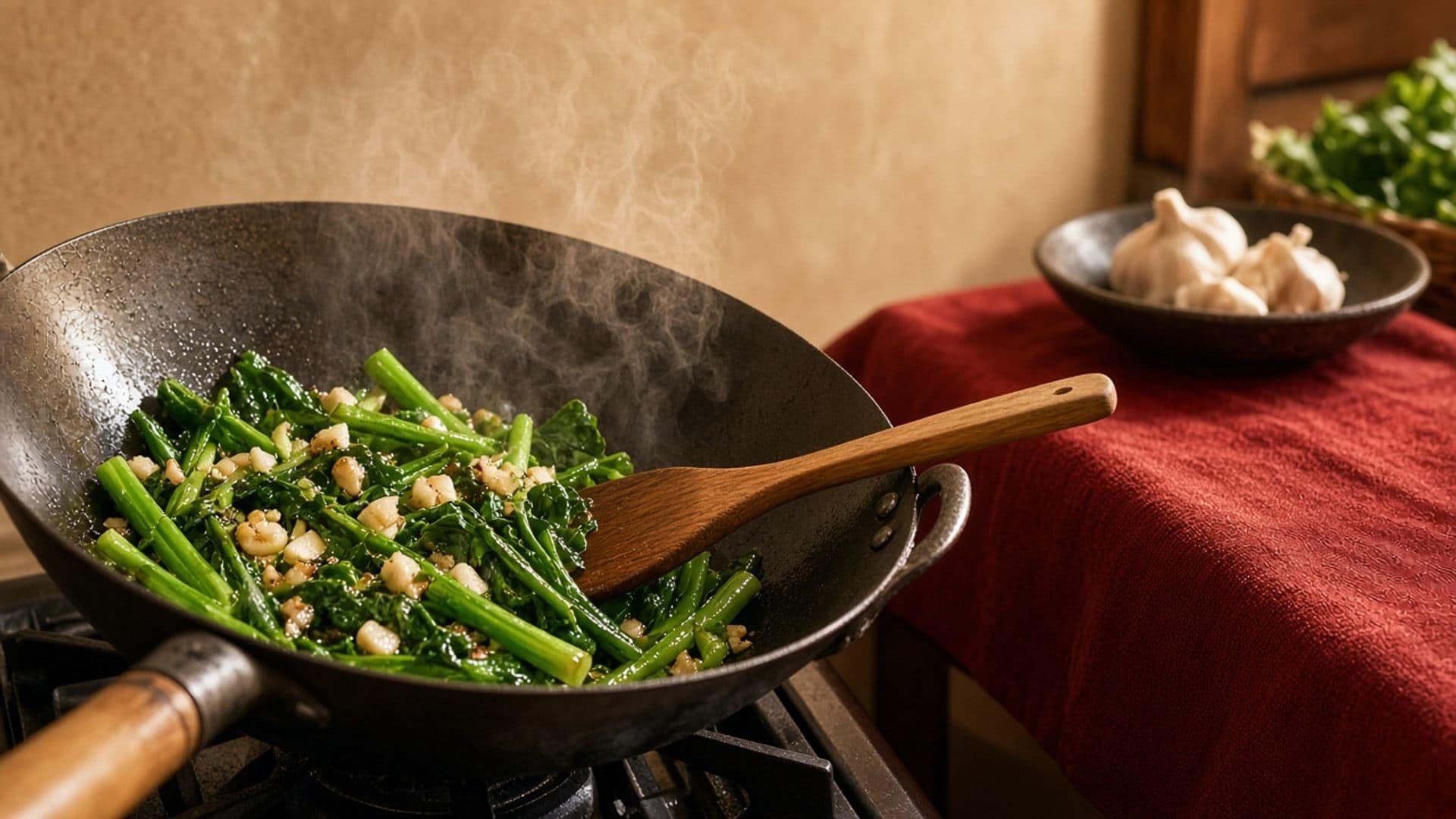
Home Chinese cooking is a different craft from restaurant Chinese cooking. You do not have a pit of 30-megajoule burners. You do have a stove, a pan, and — if you set it up — the same pantry logic: soy, ginger, garlic, spring onion, Shaoxing wine, white pepper, a little sugar, a little vinegar, and one regional accent at a time.
The methods below are written for a home stove. City pages add a produce accent so Hobart and the Gold Coast are not pretending to share a fishmonger.
What you need
A wok is ideal and not mandatory. A heavy, wide frypan that can get properly hot will cook tomato and egg, fried rice and mapo-style tofu. Steaming wants a plate and a lidded pot or a bamboo steamer. Keep a lid. Keep a jug of water. Keep a cloth, because a hot pan spits.
Pantry, once: light soy, dark soy, Chinkiang or black vinegar, toasted sesame oil, Shaoxing wine, potato starch or cornflour, chili-bean paste if you want Sichuan heat, white pepper, rock or caster sugar. Fresh, often: ginger, garlic, spring onion, cilantro if you like it, a block of firm or silken tofu, eggs, a green vegetable.
Do not buy twelve sauces in week one. The recipes below use a short list on purpose.
Heat, batching, and the crowded pan
The usual home failure is a crowded, medium pan. Protein steams in its own moisture and goes grey. Vegetables weep. Rice clumps. Cook in batches, return everything at the end, and season after the colour is right. If the smoke alarm is your only heat feedback, open a window and still go hotter than a Western sauté.
Salt in this kitchen often arrives as soy. Taste before you add more. Sugar is a balancer, especially against vinegar and chili, not a glaze by default.
The original recipes
- Tomato and egg — a home staple, useful as a first wok lesson.
- Garlic gai lan — the green plate that makes a table look finished.
- Weeknight fried rice — cold rice, eggs, spring onion, restraint.
- Steamed ginger fish — the banquet centrepiece scaled to a Tuesday.
- Mapo-style tofu — chili-bean paste, tofu, a little mince or mushrooms.
- Smashed cucumber — cold, fast, and the right contrast to a braise.
Each method is written in full on its own page so you can print or bookmark it. None of them require a restaurant booking.
City notes
Produce is not the same in Hobart and Cairns, and it is not the same in January and July. The city recipe hubs — Melbourne, Adelaide, Perth, Brisbane, Hobart and the others — talk about fish, greens and pantry streets without turning into shop directories. Use them when you want the method to meet the market.
If you are cooking for a crowd, stop. A banquet is a restaurant form. Read the banquet guide and decide whether your kitchen actually wants twelve people. A better home pattern is two recipes from this list plus rice and a cold plate.
Cook one region per session. Chili-bean paste in the steamed fish is how a clear idea becomes a brown one.
A first fortnight, in order
If you have not cooked this food at home, do not begin with a whole fish and a banquet guest list. Cook in this order.
Night one: smashed cucumber and rice from the cooker. You are learning dressing balance.
Night two: tomato and egg. You are learning when eggs should leave the pan.
Night three: garlic gai lan beside whatever protein you already know how to cook. You are learning the green test.
Night four: weeknight fried rice with the leftover rice you should have made on night one and chilled.
Night five: mapo-style tofu if you want heat, or steamed ginger fish if you found a fish you trust.
That is a regional education without a lecture. You have cooked a cold plate, a home stir-fry, a green, a rice, and either a Sichuan-leaning braise or a southern steam.
Rice, in more detail than people bother with
Rinse jasmine until the water is less cloudy. Use a consistent water ratio in a cooker or a heavy pot. Rest the rice off the heat before you fling the lid and stir. For fried rice, spread leftover rice on a tray so it dries. For a banquet-shaped home dinner, keep the rice plain even if you also make a fried rice — two starches are how tables stall.
Brown rice and other grains will not behave the same in a wok. You can still eat them beside a braise. Do not pretend they are jasmine.
Oil, smoke, and the alarm
Use an oil with a high enough smoke point for a hot pan: peanut, canola, or another neutral oil you already buy. Sesame oil is a finisher. Chili oil is a condiment. Olive oil is the wrong flavour for these recipes even when it is the bottle on the bench.
Open a window. Use the fan. A timid pan is a more common failure than a charred one. If you scorch the garlic, throw it away and start the aromatics again. Bitter garlic will follow every bite.
Shopping without a specialty list
The first shop should fit in one basket: soy, vinegar, starch, ginger, garlic, spring onion, tofu or eggs, one green, rice. The second shop can add chili-bean paste, Shaoxing, Sichuan pepper, fermented black beans. The third shop is a fish counter on a day you will cook fish.
City recipe notes tell you what the climate does to that basket. They will not name a grocer as if the lease were permanent.
Teaching someone else
If you are cooking with children, give them the cucumber smash and the spring-onion scissors. Keep them away from the smoking pan. If you are cooking with someone who is afraid of Chinese food being “too much”, start with tomato and egg and a green. Heat can wait. The point of this hub is that the food is ordinary.
When you want the restaurant form again, stop cooking and read the banquet or yum cha pages. Home and restaurant are different crafts that share a pantry.
Knives, boards, and the wet towel
A sharp knife makes ginger into threads instead of bruised chips. You do not need a cleaver, though a cleaver is a pleasure on a cucumber and a squash. Keep one board for aromatics and one for raw meat if you are cooking both. A wet towel under the board stops it walking toward the flame.
Mise en place is not cheffy theatre in this kitchen. It is how you survive a hot pan. Cut everything before the oil goes in. The recipes on this site are written that way: ingredients, then a short, fast method.
Vegetarian cooking from the same list
Tomato and egg is vegetarian. Gai lan is vegetarian if you skip oyster sauce. Fried rice can be. Smashed cucumber is. Mapo-style tofu can be if you use mushrooms and check the chili-bean paste. Steamed fish is not. You can feed a mixed table from this hub without cooking a separate cuisine. What you cannot do is assume a restaurant will make the same swaps on a Saturday without a conversation — that conversation lives on the food guide.
The methods stay central so we do not maintain nine slightly different fried rices.
Salt, sugar, vinegar — the triangle
Most of the recipes on this hub move along a triangle: salt (usually as soy), sweetness, and vinegar or tomato acid. Chili-bean paste adds heat and fermentation on top of that triangle; it does not replace it. If a plate tastes flat, ask which corner is missing before you add more oil. If a plate tastes muddy, you probably added two regional pastes and a sweet sauce. Wipe the pan and cook a green.
Print one method, cook it twice, then move on. Repeating tomato and egg will teach you more than collecting twelve tabs.
Keep the printed page away from the wok. Soy on paper is how methods disappear. If you only bookmark one recipe, bookmark tomato and egg; it is the one that will tell you whether you are ready for the fish. Then cook the fish on a night when you actually have a fish, not as a dare.
One region per night
If you cook mapo-style tofu, do not also make a sweet-sour sauce. If you steam a ginger fish, keep the rest of the table Cantonese-leaning: a green, rice, cucumber. Mixing every bottle on the shelf is how home cooks recreate the atlas menu they were trying to escape. The regional essay is the map; this hub is the practice.