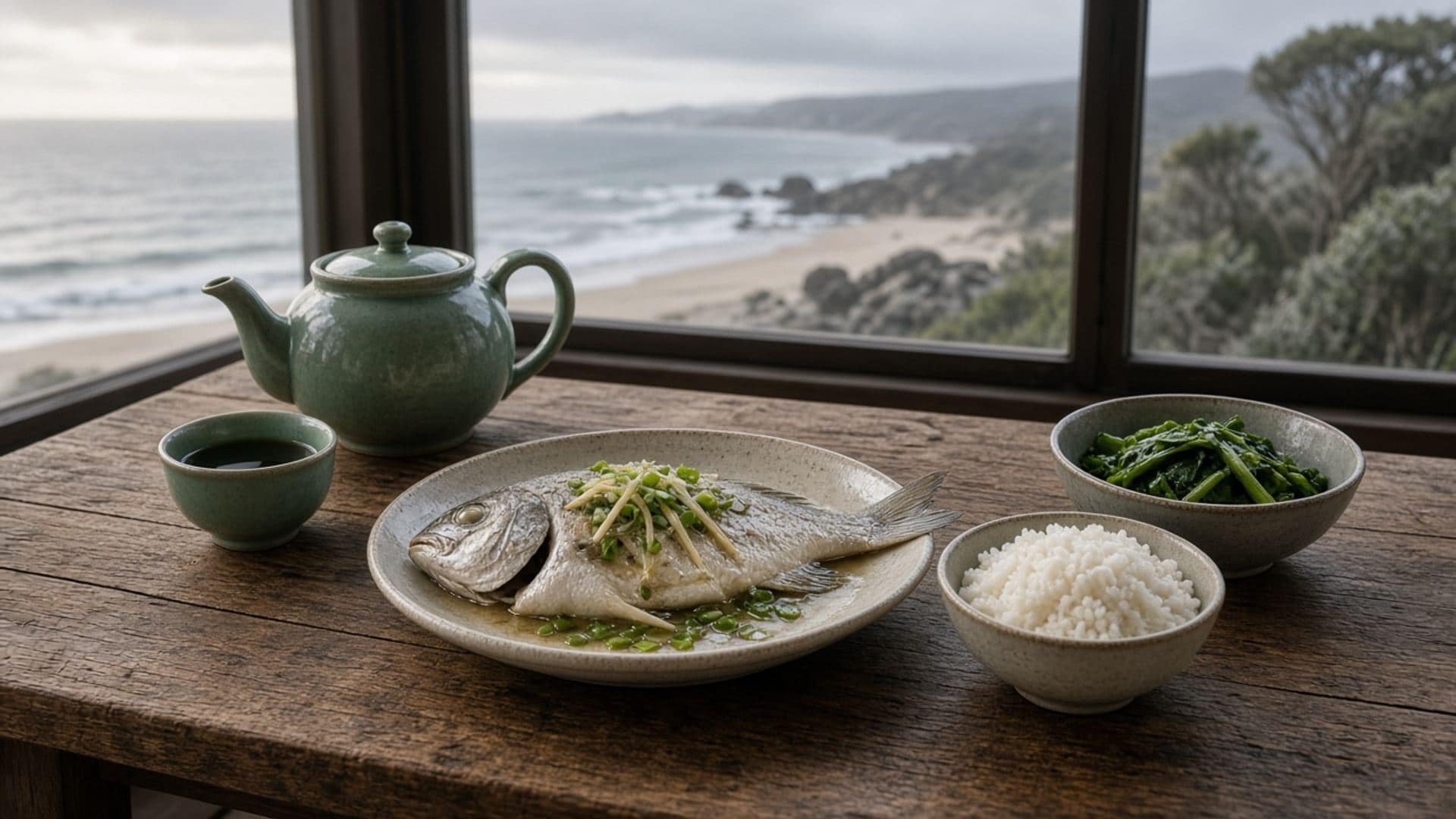
Use this hub for a small-capital map: city rooms, seafood that should taste of the island, and no lantern street you are owed.
Precincts
Hobart’s Chinese restaurants are part of a small-capital fabric: a handful of city rooms, some inner-suburban shopfronts, and a visitor economy that clusters around the waterfront and Salamanca without turning those streets into a Chinese precinct. You will not find Melbourne’s lane of association halls. You may find a kitchen that can steam a fish so cleanly that the lack of a lantern street stops mattering.
Choose by table, not by postcard. A waterfront address is a view. A backstreet room may have the wok. Banquet capacity is limited; large family events sometimes need an early booking or a different kind of venue. That is scale, not a slight.
If you want a museum-and-gate Chinatown day, this is not the city. If you want a cold-climate Chinese meal that tastes of the island, it can be.
Produce and the pantry
Tasmanian salmon, squid, abalone in season, and cold-water fish are the advantage — when the kitchen buys them. Winter greens are sturdy. Summer is short and should show up in the tomato-and-egg and the cucumber plate. The recipe note is written for a kitchen that is often cold when you start cooking.
Rhythm of the week
Winter evenings start early. Tourist summer is louder near the water. Sunday can be your family sitting. Phone if the table is larger than six; do not assume a walk-in banquet.
Cruise-ship days change the waterfront. They do not have to change your suburban dinner.
How to choose a room here
Use the same tests as the rest of the site, tuned to this city’s scale.
- Region: does the menu have a centre of gravity, or is it an atlas?
- Wok: is there heat, steam and a vegetable that still has snap?
- Table: can the room actually seat your group, or are you pretending a two-top is a banquet?
- Honesty: does the floor answer an allergen or chili question in a way you believe?
The companion reviews page stretches those tests. The recipes page takes them home.
What we will not do
We will not invent a “best in Hobart” list. We will not quote a price. We do not keep a live list of rooms. If you need a table, phone a room. If you need a correction to this precinct note, use contact.
Related reading
For yum cha mechanics, use the food guide. For celebration sequence, use the banquet guide. For the difference between Cantonese and Sichuan, use the regional essay. Then come back to this city’s streets.
Read the food guide for yum cha mechanics; not every Hobart week will offer the full cart form, and that is fine.
Winter covers and summer waterfronts
A July sitting wants broth, a low ceiling and a kitchen that preheated the plates. A January sitting can handle a walk from the water. Do not run the same plan for both.
Small-city reputation
In a small capital a single loud rumour can define a kitchen for a year. Eat for yourself. The reviews method exists so you have tests that are not gossip.
Seafood as a responsibility
If the menu is proud of Tasmanian fish and the flesh tastes tired, the room failed a higher test than a inland city would. Say so to the floor. Then cook the steamed fish at home on a better piece.
A last local note
Hobart does not owe you a precinct walk. It owes you a kitchen that can handle a fish. If you came from Melbourne expecting lanterns, recalibrate and order the greens. If you came from a cruise list expecting a show, look at the next table instead of the window. The how-to is short because the city is. The standards are not lower.
If you only have one evening in Hobart, spend it on a kitchen that will name the fish, not on a hunt for a lantern street that this city does not owe you. The harbour will still be there after the greens.
Salamanca and the working water
The waterfront is a visitor map. Chinese dining in Hobart is more often an ordinary city or inner-suburban room. Use the water for a walk. Use a kitchen that can name a fish for dinner. If a room is selling the mountain and the harbour in the same sentence as a mixed banquet, read the menu for a region before you sit down. The mountain will still be there after you have eaten.